How Do Autistic Children Play?
Play is an essential part of childhood, but autistic children may engage in play differently than their peers. Understanding these differences helps families and educators support growth and connection.
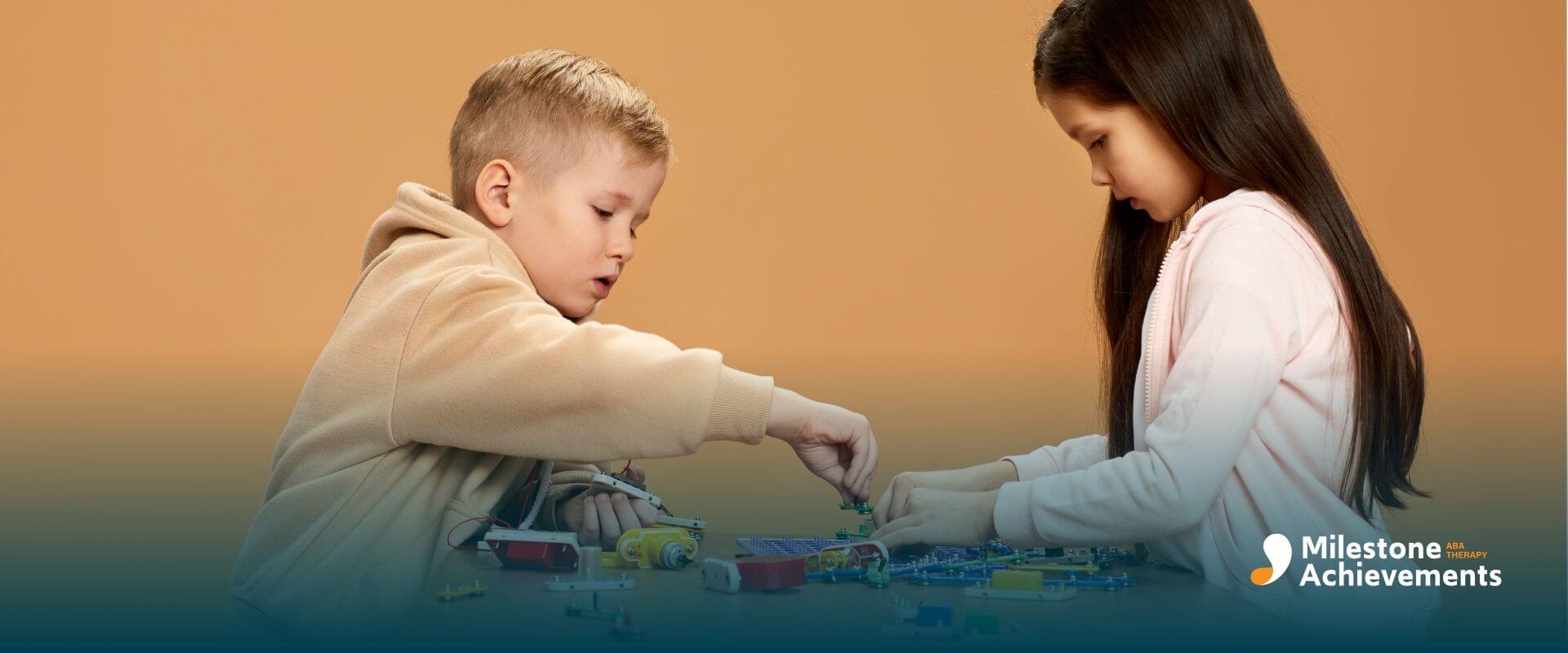
Autistic children often prefer structured or repetitive play, such as lining up toys, spinning objects, or focusing on specific details. This type of play can provide comfort and predictability. Some may engage in sensory play, exploring textures, sounds, or movement to regulate emotions and process their environment. Others may enjoy parallel play, where they play alongside peers rather than directly with them, gradually building social interaction skills.
While imaginative play may look different, many autistic children express creativity through unique interests, storytelling, or specialized hobbies. With encouragement and guidance, play can become a powerful tool for developing communication, social skills, and emotional regulation.
At Milestone Achievements, our ABA therapy programs in Georgia help families nurture play skills that build confidence, foster relationships, and support overall development.
Learn how we can help your child thrive through play and beyond. Contact us today!
SOURCES:
https://en.wikipedia.org/wiki/Sensory_play
https://www.bbc.co.uk/tiny-happy-people/articles/z6whxbk
https://health.clevelandclinic.org/benefits-of-sensory-play-ideas
https://www.pinterest.com/sarajcreations/sensory-play/
https://www.parents.com/why-sensory-play-is-important-8417237


Partner with us on your child's journey
Milestone Achievements offers evidence-based ABA therapy to help children with autism reach their full potential. Together we’ll set meaningful goals and celebrate progress every step of the way.
Start ABA Services Today